Foundational Steps for Managing Complex Production Incidents in Large Distributed Software Systems
Introduction
Digital shoppers expect shopping carts and streaming videos to load without single-second glitches. Yet network cables snap, databases lock up, and server processors overheat without warning. Site Reliability Engineering steps forward to eliminate these sudden technical failures. Engineers write lightweight code routines to govern giant fleets of remote servers. They fuse software development methods directly into daily system operations duties. Because digital platforms expand constantly, companies need disciplined guardrails to keep online tools safe. This comprehensive overview demonstrates practical ways to protect customer trust and cloud infrastructure. Beginners find direct learning pathways through SRESchool.com, an educational platform dedicated to modern reliability disciplines.
What Is SRESchool.com?
Engineering teams apply software automation scripts to manage expansive online services without unexpected disruptions. Consider drinking water flowing smoothly from a kitchen tap on demand. That quiet consistency represents true operational reliability across technological systems. Engineers guide platforms toward stability by tracking real performance indicators on visual boards. They establish automated processes so computers handle routine reboot chores independently. Next, they examine system logs from minor hiccups to eliminate hidden design flaws. This steady methodology keeps vital banking tools and mobile games running smoothly.
Why Does SRESchool.com Matter?
Enterprises rely completely on distributed networks, cloud engines, relational databases, and consumer phone applications. A tiny programming mistake can disable checkout buttons for millions of customers. Reliable engineering methods allow technical teams to spot minor anomalies early. Technicians study incoming network patterns and patch software bugs before shoppers suffer delays. Also, product managers must weave system resilience directly into initial software plans. When organizations create dependable architectures, they protect business earnings and retain loyal shoppers. Thoughtful engineering ensures critical software functions properly during peak traffic moments.
What Does an SRESchool.com Team Do?
A dedicated crew watches server vital signs every single second. They configure precise alerting rules that wake engineers during severe system troubles. Next, they execute rapid incident resolution actions to restore interrupted network connections. They program custom scripts so systems fix standard memory leaks automatically. After that, they calculate capacity budgets to purchase extra computing power before seasonal rush hours. They review upcoming software updates to ensure stable production releases. Finally, they author clear postmortems that explain past defects without blaming individual staff members.
Key SRE Terms Made Easy
Reliability specialists track concrete performance indicators to measure progress across complex platforms. A Service Level Indicator records actual response speeds for online visitors. A Service Level Objective represents the formal target percentage that engineering managers promise to maintain. An Error Budget marks the tiny margin of downtime an organization can safely risk. Toil covers repetitive manual chores that software scripts can easily handle. Observability grants deep visibility into complex infrastructure through metrics, traces, and text records. An on-call rotation assigns standby engineers to resolve sudden production emergencies.
| SRE Term | Simple Meaning | Example |
| SLI | A direct calculation of system speed or reliability. | Tracking API latency under two seconds. |
| SLO | A performance target that developers commit to hitting. | Maintaining uptime across 99.9 percent of requests. |
| Error Budget | An agreed slice of acceptable temporary failure. | Permitting forty minutes of service outage quarterly. |
| Toil | Tedious manual upkeep that a script can run. | Clearing temporary storage folders by hand weekly. |
| Observability | An inside view of system behavior via telemetry. | Inspecting error traces to catch database timeouts. |
| Incident | A sudden operational disruption that harms user sessions. | An authentication service rejecting customer passwords. |
What Is SRE Training?
Comprehensive SRE Training equips aspiring operators with the hands-on abilities required to supervise modern platforms. Students explore fundamental stability concepts, quantitative metric tracking, and alert mechanics through realistic sandbox environments. They configure visual telemetry dashboards to evaluate processor load and network bandwidth. Next, they practice emergency triage skills by debugging simulated service failures. They study cloud architecture best practices, capacity planning techniques, and practical ways to eliminate repetitive toil. Realistic lab practice matters because theory alone never prepares an engineer for midnight server crashes. Ambitious learners locate guided courses and lab environments at SRESchool.com.
What Is SRE Certification?
An industry SRE Certification demonstrates that an engineer holds the knowledge needed to maintain complex environments. A Certified Site Reliability Engineer proves competence in uptime management, error reduction, and emergency remediation. Guided curriculums help engineers master vital operational ideas systematically. However, passing an online exam never replaces actual debugging experience on production cloud servers. Prospective engineers must assemble real software scripts, configure cloud networks, and solve complex server problems. Coupling verified test scores with authentic code portfolios builds true professional credibility.
What Is a Site Reliability Engineering Course?
An effective Site Reliability Engineering Course walks students through organized learning stages. First, newcomers study Linux command environments, cloud fundamentals, and basic network protocols. Next, they master observability principles by gathering live metrics through open-source tools. They define measurable reliability targets and establish functional error allowances. Following that foundation, students tackle real outage triage, blameless reviews, automation code, and elastic cloud designs. Finally, they apply these modern techniques to live cloud deployments that mirror enterprise architectures. This step-by-step curriculum transforms entry-level coders into skilled infrastructure guardians.
SRE Tools Made Simple
Engineers employ specialized SRE Tools to supervise, diagnose, and protect running infrastructure. Collection agents record hardware utilization, while dashboard engines convert raw data points into readable graphs. Event loggers save text lines from every transaction to assist retrospective code debugging. Tracing frameworks follow an individual customer request through dozens of discrete internal microservices. Paging engines ping engineers only when critical system limits fail. Industry-standard options include Prometheus for numeric tracking, Grafana for visual reporting, and OpenTelemetry for trace compilation. These technologies grant software builders comprehensive visibility into cloud networks.
| Learning Area | What Learners Can Practice |
| System Metrics | Gathering server memory trends using Prometheus agents. |
| Visual Boards | Constructing informative telemetry views within Grafana dashboards. |
| Event Traces | Tracking user payment calls through OpenTelemetry pipelines. |
| Alert Rules | Triggering emergency phone alarms for dropped web requests. |
| Task Automation | Assembling Bash routines to cycle unresponsive server processes. |
Real-Life Scenarios
- An e-commerce platform absorbs massive holiday traffic spikes because auto-scaling routines launch extra servers before checkout pages crash.
- A payment gateway drops customer transactions, but an automated observability alert pings the standby engineer within thirty seconds.
- A technician wastes four hours manually renewing security certificates, so the team writes an automation routine to eliminate that chore permanently.
- A central database exhausts storage limits during peak traffic, driving the team to add disk space and record blameless incident findings to prevent future capacity shortfalls.
What Is SRE Consulting?
Organizations engage SRE Consulting professionals to inspect existing infrastructure and optimize internal delivery workflows. These experienced specialists evaluate current software pipelines to uncover hidden operational risks and performance bottlenecks. They guide developers toward practical service goals and assist in selecting robust telemetry tooling. Next, they create streamlined emergency playbooks to minimize downtime during sudden platform outages. Consultants teach internal teams to craft automated scripts that remove exhausting daily toil. Finally, they furnish a clear operational blueprint that steers the enterprise toward lasting technical resilience.
What Is SRE as a Service?
Emerging companies lacking dedicated operations departments frequently adopt SRE as a Service arrangements. External engineering specialists supervise cloud architectures day and night to head off unplanned service disruptions. They manage active alerts, conduct routine system health audits, and apply critical cloud security patches. Furthermore, they develop custom automation routines so standard platform tasks execute without human intervention. Businesses must outline explicit service expectations before entering these technical partnerships. Clear operational boundaries ensure external engineers keep digital products fast, dependable, and resilient.
What Is Corporate SRE Training?
Corporate SRE Training unites engineering divisions under shared operational frameworks and reliable coding standards. Developers and operations specialists adopt a common vocabulary when evaluating uptime objectives, platform alerts, and system health. The program introduces unified monitoring protocols, blameless retrospective meetings, and practical automation patterns for internal software stacks. Instructors configure training modules around an organization’s specific cloud providers and technical roadmaps. Collaborative sandbox exercises enable colleagues to troubleshoot simulated outages together safely. This unified practice cultivates agile engineering teams that resolve production challenges with poise.
Common Mistakes to Avoid When Choosing Delhi Events
- Reserving a seat without reading the agenda leaves you trapped in irrelevant discussions.
- Neglecting the event venue location creates severe commuting delays across congested highway sectors.
- Skipping background reviews on keynote speakers results in basic lectures offering minimal actionable insight.
- Forgetting to verify hands-on laboratory prerequisites leaves you without essential software packages installed.
- Overlooking ticket cancellation policies causes monetary losses when personal schedules suddenly shift.
- Skipping dedicated networking breaks prevents you from connecting with local industry leaders.
- Failing to verify venue Wi-Fi stability makes following live cloud coding demonstrations impossible.
- Selecting basic introductory workshops when you require advanced technical seminars wastes valuable study time.
How SRESchool.com Can Help
SRESchool.com delivers comprehensive instructional courses and enterprise consulting options centered on system resilience. The platform presents a structured Site Reliability Engineering Course alongside hands-on SRE Training tracks. Aspiring practitioners prepare for verified SRE Certification using interactive cloud labs and practical engineering challenges. Readers can explore an introductory SRE Tutorial or examine standard SRE Tools for real-time observability. For expanding companies, the team customizes Corporate SRE Training to align engineering divisions. Additionally, businesses leverage experienced SRE Consulting and flexible SRE as a Service packages to protect critical infrastructure.
Frequently Asked Questions
1. Can a complete beginner learn site reliability easily?
Starting engineers grasp fundamental resilience concepts quickly through structured study and consistent lab practice. You start with basic Linux operations, simple network routing, and entry-level automation scripting. Once you understand those technical foundations, you advance toward telemetry collection and emergency troubleshooting. Steady experimentation within cloud environments turns complex engineering theories into second-nature skills.
2. How much coding knowledge does an engineer need?
Reliability professionals require enough scripting experience to parse log streams and automate repetitive infrastructure upkeep. Technicians write small programs using Python or Go to query server health APIs. You avoid spending workdays constructing massive consumer software applications from scratch. Writing dependable, legible automation routines remains the primary objective for daily engineering success.
3. What makes this role different from classic operations?
Traditional operations teams performed physical hardware installations and executed software changes manually via step-by-step documentation. Modern reliability engineering relies on program code to configure cloud infrastructure and heal broken services automatically. Engineers split their schedule between maintaining live systems and authoring software features. This balanced focus eliminates repetitive human toil and keeps complex platforms running safely.
4. Why are error budgets important for product teams?
Error budgets define an objective tolerance threshold for acceptable application downtime. They balance consumer demands for new software capabilities against core system stability requirements. When a budget holds ample room, developers deploy feature updates rapidly. But if unexpected outages exhaust the allowance, engineering teams pause deployments to repair brittle backend components.
5. What does the term operational toil mean?
Toil describes manual, repetitive operational tasks that generate no lasting technical improvement for an application. Common examples involve manual server restarts, routine configuration edits, or repetitive data access approvals. Reliability specialists craft automated software routines to handle these tedious assignments permanently. Automating those low-level chores grants engineers time to design stronger system architectures.
6. How does real-time monitoring protect business profits?
Telemetry agents evaluate server resources and user request patterns continuously to uncover emerging technical defects. When failure rates spike, the monitoring system alerts standby engineers before shoppers encounter broken checkout screens. Detecting anomalies early averts wide-scale platform downtime that damages sales figures and annoys customers. Uninterrupted service availability safeguards revenue streams and preserves brand value across markets.
7. What happens during a standard incident response?
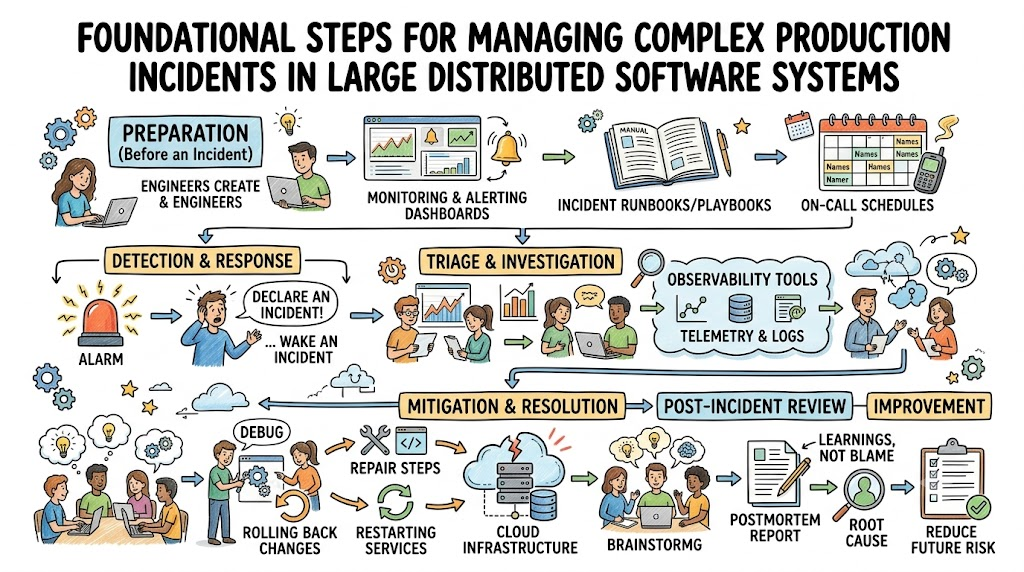
Sounding alarms prompt the on-call engineer to log into debugging dashboards and isolate root causes. The responder reroutes incoming traffic or revokes flawed software releases to restore normal service. Afterward, the engineering group compiles a blameless postmortem explaining the operational failure. Team members then program automated safeguards to prevent that specific glitch from recurring.
8. What is the true value of professional certification?
Certifications confirm that an engineer commands essential reliability terminology, observability tools, baseline metrics, and recovery processes. These credentials distinguish an applicant’s resume during competitive cloud engineering hiring rounds. Still, candidates must demonstrate practical software code portfolios and live debugging capabilities during interviews. Merging formal certifications with genuine project experience yields outstanding technical career opportunities.
9. Why should an enterprise consider professional consulting?
Outside consultants evaluate complex corporate architectures with fresh objectivity to spot dangerous operational oversights. They assist internal developers in establishing measurable service objectives and selecting optimal telemetry tools. Consultants also optimize emergency triage protocols so departments recover quickly from unexpected cloud disruptions. Their structured direction saves organizations time and prevents costly operational mistakes during platform migrations.
10. How does outsourced reliability support actually work?
External service providers oversee cloud architectures and manage emergency alerting systems through twenty-four-hour coverage models. Their technicians execute scheduled maintenance, install security patches, and support in-house developers during severe service outages. This approach assists growing enterprises that cannot yet fund an expansive internal operations department. It ensures high service uptime while keeping corporate operating budgets balanced.
11. Which primary tools should a new learner master?
Novice practitioners start by adopting Prometheus for metric collection and Grafana for visual data analysis. Next, you investigate OpenTelemetry to understand how telemetry traces travel through distributed microservice meshes. You also study container basics with Docker alongside cloud networking fundamentals. Mastering these foundational technologies builds the practical confidence required for everyday enterprise engineering assignments.
12. Why do engineering teams run blameless postmortems?
Blameless retrospective reviews focus on repairing brittle processes instead of finding fault with individual team members. Humans commit natural mistakes when resolving sudden outages under extreme workplace stress. By evaluating platform failures objectively, teams identify inadequate tools and install stronger technical safeguards. This supportive workplace atmosphere encourages transparent problem reporting and produces resilient digital services.
Conclusion
Reliability engineering protects consumer web platforms and business applications through smart software, constant system observation, and automated problem resolution. It keeps essential services dependable during traffic surges, saving organizations money while delighting active users. Motivated individuals master these practical techniques through structured curricula, interactive cloud environments, and industry-standard observability frameworks. Furthermore, modern enterprises leverage specialized advisory teams and managed service partners to fortify complex architectures. SRESchool.com equips modern practitioners and growing businesses with the courses, professional certifications, and consulting needed to achieve lasting digital resilience.
Leave a Reply