Key Medical Requirements And Essential Study Strategies For Aspiring Commercial Aviators
Introduction
Flying an airplane is a thrilling dream for many people. But pilot training takes careful planning, steady practice, and serious money. You must learn flight rules, master real aircraft controls, and pass health checks. A global aviation platform named Best Pilots Now helps people explore flight schools, courses, and job paths. In this simple guide, you will learn the main steps to earn your wings. You will see how different pilot licenses work in the real world. Next, you will discover key facts about pilot training costs and flight schools. You will also learn about pilot jobs and common student mistakes. This guide explains aviation in plain language, so you can plan your path with confidence.
What Does a Pilot Do?
A pilot flies an aircraft to move people or goods safely through the air. Airline pilots fly big jets full of passengers across countries and oceans. Cargo pilots carry boxes, food, and medicine on tight schedules, often flying at night. Private pilots fly business jets or small propeller airplanes for personal trips. In addition, flight instructors teach new students the basics of safe control. Every pilot must follow strict safety rules before each flight starts. They check the weather, inspect the plane, and plan the flight path. Once in the sky, pilots talk to air traffic control towers. They share the workload with their co-pilot and monitor modern instruments. Good teamwork and calm decision-making keep flights safe when unexpected storms appear. Pilots must stay alert and handle long, demanding work hours.
How to Become a Pilot
You can learn how to become a pilot by following clear, orderly steps. First, you must meet the basic age and language rules in your home country. Most countries ask students to be at least seventeen years old to hold a private license. Next, you must pass a medical check with an official aviation doctor. This doctor tests your eyes, hearing, and heart before you start flying lessons. After that, you begin ground lessons in a classroom or on a computer. Ground school covers navigation, weather, airplane parts, and federal flight rules. You also start dual flight lessons in the sky with a licensed teacher. Soon, you complete your first solo flight with no instructor on board. You then log solo cross-country hours, pass written exams, and finish a practical flight test called a checkride. Remember to check local aviation rules, because each country sets its own standards. You can research schools and training steps at bestpilotsnow.com today.
How to Choose the Best Flight Schools
Finding the right training academy shapes your entire flying experience. Always verify that your national aviation agency officially approves the school. Look closely at the teaching staff and their total flight instruction hours. You also want to inspect the fleet of training airplanes. Clean, well-maintained planes spend more time flying and less time broken in hangars. Check the safety history of the school and ask for feedback from current students. Location matters too, because sunny regions allow you to fly more days each year. An online platform like Best Pilots Now supports early research by organizing school details in one spot. Always verify school claims on your own before you sign contracts or make payments.
| Selection Factor | What to Look For | Why It Matters |
| School Approval | Official civil aviation license | Ensures your flight hours count toward your license |
| Fleet Quality | Clean, modern, well-maintained planes | Reduces flight delays from broken equipment |
| Instructor Depth | Experienced, full-time flight teachers | Gives you steady, high-quality flying lessons |
| Local Weather | Many sunny days with calm winds | Lets you finish your flight training faster |
| Fair Pricing | Clear fee sheets with no hidden costs | Protects your budget from unexpected surprise bills |
Types of Pilot Training Courses
Different flying careers require different types of pilot training courses. Private pilot license training is the starting point for almost every beginner. This license lets you fly family and friends in single-engine planes for personal travel. But you cannot fly for money with a private license. If you want to earn a paycheck, you must take commercial pilot training. This advanced course teaches precise flying maneuvers, complex navigation, and higher safety standards. After that, students who want airline pilot training can join cadet programs or airline academies. These programs prepare you to fly huge airliners with two-person crews. Later, you must take type rating courses. A type rating is a special course that licenses you to fly one specific large jet model, like an Airbus or Boeing. Training paths and licensing rules differ across countries, so plan your path carefully.
Understanding Pilot Training Cost
Pilot training cost depends on many moving pieces. The total price changes based on airplane rental rates, fuel costs, and school location. Flight hours make up the biggest share of your training bill. You must pay an hourly rate for the aircraft and a separate rate for your flight instructor. Ground lessons, books, and computer study programs add to the total cost. You also need to budget for medical checks, government exams, flight headsets, and paper charts. Travel, food, and living expenses during school can raise your total bill quickly. Many students need extra practice flights before they pass their checkrides. Always request complete fee sheets and compare plane rates across multiple schools. You can begin exploring school prices on Best Pilots Now before visiting flight fields.
| Expense Item | What It Covers | Budget Advice |
| Aircraft Rental | Fuel and hourly plane use | Fly regularly each week so you learn faster |
| Flight Instructor | One-on-one teaching in the air and ground | Pick a patient teacher who fits your learning style |
| Exams and Fees | Government written tests and flight checkrides | Study hard early to avoid paying for repeat tests |
| Gear and Headsets | Flight bags, aviation headsets, and logbooks | Buy reliable, comfortable gear that lasts for years |
| Living Costs | Housing, food, and local travel near the school | Plan personal funds before moving away from home |
Medical Checks and Flight Safety
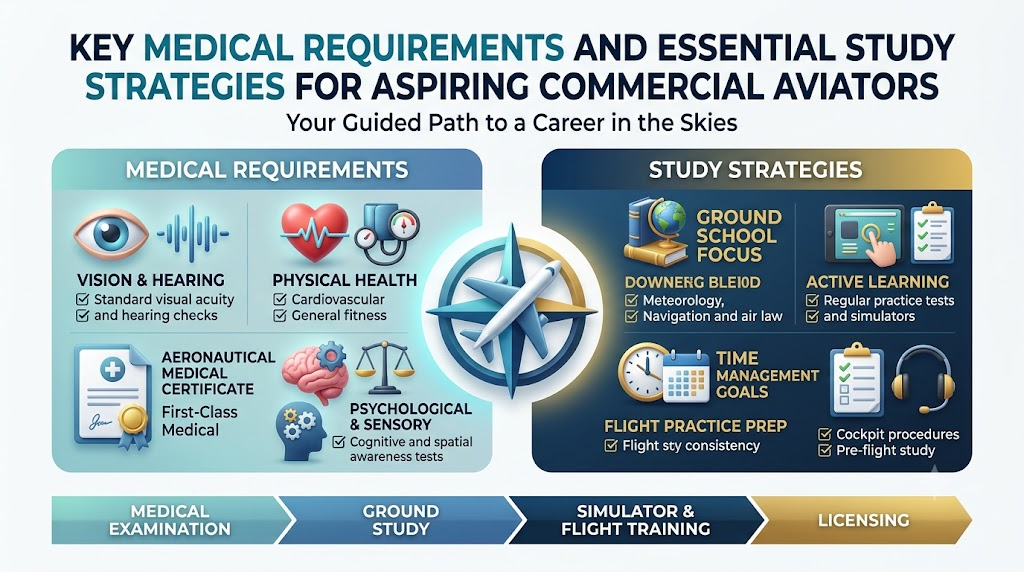
Aviation authorities require all pilots to hold a valid medical certificate. Doctors check your distance vision, color vision, hearing, and blood pressure. They test your heart and review your medical history for major illnesses. A basic medical certificate works for private flying, but airline pilots need the strictest first-class health pass. Beyond medical health, safe pilots practice solid flying habits on every trip. They check weather reports carefully before leaving the ground. They walk around the plane and inspect wings, tires, and oil levels before engine start. They never fly when tired, ill, or stressed. Always check your local aviation authority’s website to read current medical rules.
Real-Life Scenarios / Experiences
- A student flies three times each week, studies ground school every evening, and finishes private training in four months.
- A student flies only once every two weeks, forgets lessons between flights, and spends extra money repeating basic maneuvers.
- A commercial student trains in a region with stormy winters, faces heavy weather delays, and finishes two months late.
- A pilot completes a commercial course, earns a flight instructor rating, and builds flight hours while earning an hourly wage.
Pilot Jobs and How to Hire a Pilot
Aviation offers many different career paths once you earn your commercial license. Many new commercial pilots work as flight instructors to build total flight hours. Others fly cargo runs at night, tow banners over beaches, or drop skydivers. As flight hours grow, pilots apply for corporate jet jobs or regional airline positions. To prepare for pilot jobs, flyers maintain neat logbooks, clean resumes, and valid ratings. Aviation companies want pilots with great safety records, sharp radio skills, and steady hands. When businesses need to hire a pilot, they check flight hours, medical stamps, and type ratings. Best Pilots Now offers a developing pilot directory and planned job tools. These features will connect pilots and flight employers in the future as the platform grows.
Common Mistakes to Avoid
- Flying irregularly: Taking long breaks between flight lessons causes you to forget key skills and wastes your training budget. Fly two to three times every week to build sharp muscle memory.
- Ignoring the ground school: Skipping book study leads to failed written exams and costly ground delays. Study your navigation, air rules, and weather books every single day.
- Underestimating total expenses: Planning only for the bare minimum flight hours leaves students without money before finishing. Add twenty percent more money to your training budget for extra flights.
- Skipping the medical check first: Paying school tuition before seeing an aviation doctor can end your dream if you fail health tests. Pass your official aviation medical exam before spending money on flight hours.
- Choosing a school based only on price: Picking the cheapest academy can lead to poorly serviced aircraft and sudden delays. Visit schools in person, inspect their planes, and talk to current students first.
- Not preparing for flights: Arriving at the airport without reviewing flight maneuvers wastes paid instructor time. Brief yourself on every flight maneuver at home before entering the cockpit.
- Ignoring weather patterns: Forgetting to review wind, clouds, and storms leads to sudden flight cancellations. Check aviation weather reports early each morning before heading to the flight line.
- Neglecting radio practice: Feeling shy on the radio causes confusion with air traffic control towers. Practice standard aviation radio calls at home using audio tapes and flight simulators.
How Best Pilots Now Can Help You Start
Best Pilots Now serves as a global aviation discovery platform for future flyers. The platform helps beginners explore flight schools and understand different pilot training courses. Visitors can read clear guides about licensing steps, flight hours, and pilot training costs. You can compare training paths, from basic private lessons to advanced jet ratings. The platform is also developing a pilot directory to help employers find qualified aviators. Planned community forums and pilot job features will help pilots share tips and find work. These community tools are still in development and will roll out over time. You can visit bestpilotsnow.com today to read helpful training guides and plan your flying journey.
Frequently Asked Questions
1. How old must I be to start pilot training?
You can take flying lessons at any age with an instructor. But most countries require you to be at least sixteen years old to fly solo. You must reach seventeen years old to hold a private pilot license. Commercial pilots must be eighteen years old. Airline captains must reach twenty-one or twenty-three years old, depending on national aviation rules.
2. Can I learn to fly if I wear glasses?
Yes, you can fly an airplane while wearing corrective glasses or contact lenses. Aviation doctors check that your eyesight corrects to twenty-twenty vision with your glasses on. You must also pass a color vision test to read cockpit lights and airport signals. Always check your local aviation agency’s medical standards before booking your first health exam.
3. How long does it take to earn a private pilot license?
Most full-time students finish private pilot training in three to six months. Part-time students who work regular jobs often take six to twelve months. Flying multiple times per week helps you finish much faster because you remember each lesson. Bad weather, plane maintenance, and personal schedules can also change your total training timeline.
4. What is ground school?
Ground school is the classroom portion of your flight training program. You study airplane engines, aerodynamics, aviation weather, navigation, and flight laws. Ground school prepares you to pass the official written test from your government aviation agency. You can take ground school inside a local classroom or through an approved online video course.
5. Can I work as a pilot with only a private pilot license?
No, you cannot fly for money with only a private pilot license. A private license allows you to fly yourself, your friends, and family for recreation or personal business. You can share direct flight expenses equally with your passengers, but you cannot make a profit. You must earn a commercial pilot license to get paid to fly.
6. What is a checkride?
A checkride is the practical flight test you take to earn an aviation license. An official government examiner tests your knowledge on the ground during an oral exam. Next, the examiner flies with you in the aircraft to test your real maneuvers and emergency skills. If you perform each maneuver safely, the examiner issues your pilot license.
7. What is an instrument rating?
An instrument rating is an add-on qualification for your existing pilot license. It teaches you to fly aircraft solely by watching cockpit instruments when flying through thick clouds or fog. Flying inside poor weather without this rating is dangerous and against the law. Most commercial aviation employers require every candidate to hold an active instrument rating.
8. What is a type rating?
A type rating is an advanced certification for one specific large or turbine-powered aircraft model. Small planes do not require type ratings, but large passenger airliners and corporate jets do. Pilots train in advanced full-motion flight simulators to learn airplane systems and emergency procedures. You must earn a new type rating whenever you switch to a different airliner type.
9. How many flight hours do I need to become an airline pilot?
The required flight hours depend on your country’s civil aviation laws. In the United States, airline first officers usually need fifteen hundred flight hours. Many other nations allow graduates from approved cadet programs to start with two hundred fifty hours. Pilots often work as flight instructors, skydive pilots, or cargo flyers to build up their flying hours.
10. Why is pilot training expensive?
Pilot training costs a lot because airplanes burn expensive aviation fuel during every lesson. Schools must pay skilled flight instructors and maintain aircraft to strict safety standards. They also carry expensive insurance policies and pay airport hangar fees. You can save money by studying books thoroughly at home and flying on a steady weekly schedule.
11. What is the difference between modular and integrated training?
Integrated training takes you from zero experience to a commercial license in one continuous, full-time program. Modular training lets you complete one license at a time at your own speed. Integrated courses finish faster, but they require a large upfront payment. Modular training offers more flexibility, allowing you to pay as you go while working another job.
12. How do I choose between local flight schools?
Compare schools by visiting their hangars, meeting flight teachers, and inspecting their airplanes in person. Ask about their maintenance schedules, aircraft availability, examiner wait times, and hidden fees. Request a written cost sheet that lists plane rental, instructor rates, and fuel surcharges. You can use Best Pilots Now to discover and compare quality flight schools in your region.
CONCLUSION
Becoming a licensed pilot takes careful planning, steady practice, and wise spending. You must choose a solid flight school, complete your ground lessons, and pass health checks. Always research private and commercial training paths early so you stay on budget. Make sure to verify local aviation rules and course prices with official sources before spending money. A global aviation discovery platform like Best Pilots Now makes early research simple by gathering school facts and training guides in one place. Explore flight training courses and aviation career steps on bestpilotsnow.com today to get started.
Leave a Reply