Patient Guide to Researching Experienced Fertility Providers and Full Treatment Cycle Costs
Introduction
Finding the right care to grow a family can feel hard. Many people look at fertility clinics and feel lost. Treatment options, medicine costs, and published success rates can confuse anyone. Some families choose care near home, while other people travel far for care. Every person has unique health needs and personal goals. Because of this, learning about the process early helps you feel calm. IVFHospitalsNow.com offers free guides to help you study your options clearly. You can read clear clinic details and learn common terms on the site. This knowledge helps you prepare good questions for a doctor. When you know what to ask, you make safe choices for your family.
What is IVFHospitalsNow.com
IVFHospitalsNow.com is a free learning site that helps people study fertility care. The site does not provide medical care or rank clinics. Instead, it shares facts about care providers, treatment choices, and price ranges. You can explore country guides, check common clinic costs, and read clear definitions. The site also shows you what advertised numbers mean so you avoid surprise fees. Its main goal is to give every reader honest, neutral knowledge. You can use the site to plan doctor visits and compare choices without pressure.
Start by Learning About IVF Clinics
An IVF clinic is a medical center that helps people become parents. In vitro fertilization, or IVF, means joining an egg and sperm inside a clean laboratory dish. Doctors at IVF clinics offer basic health checks and helpful medicines to prepare the body. They also offer IUI, which means placing washed sperm directly into the uterus. Another popular service is ICSI, which places one healthy sperm inside one egg. Many clinics also freeze healthy eggs or embryos for future family planning. Different clinics have different lab tools, doctors, prices, and patient care rules. Because quality changes from place to place, you should check several factors before picking one.
What Should You Check Before Choosing?
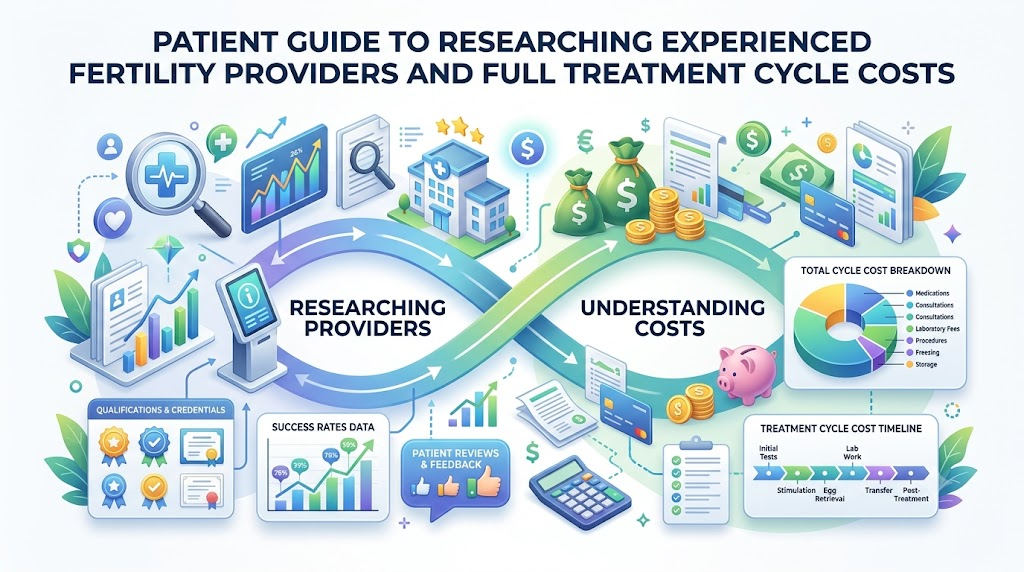
You need to look at many details before picking any clinic. First, check if the clinic offers the exact treatments you need. Next, look at the experience of the doctors and lab teams. A modern laboratory with clean air filters gives embryos the best care. Also, ask for the full treatment price so you avoid hidden bills. Read success data carefully because no clinic can promise a baby. Friendly nurse support also helps you manage daily steps with less stress. Finally, check travel rules, clinic open hours, and patient age limits. Comparing these points helps you find safe, trustworthy care.
Key Factors When Choosing an IVF Clinic
| Factor | Why It Matters |
| Treatment options | Shows what care the clinic offers |
| Doctor experience | Helps you understand the care team |
| Lab services | Supports IVF and embryo care |
| Full cost | Helps avoid surprise fees |
| Success data | Gives useful treatment context |
| Patient support | Helps with the care process |
| Location | Makes daily visits simple and fast |
| Eligibility rules | Explains who the clinic can treat |
Understanding IVF Treatment Cost
The total IVF treatment cost changes for many normal reasons. A basic clinic price may only pay for regular doctor checks. Extra costs often include daily hormone medicines, blood tests, and ultrasound scans. You also pay for egg collection, lab care, and moving an embryo into the womb. If you have extra healthy embryos, you must pay to freeze and store them. Some patients need two or more treatment rounds before finding success. Because of these extra needs, initial price tags rarely show the final bill. Always ask for a written list of all items before you start.
What to Check Before Choosing an IVF Clinic
| Factor | Why It Matters |
| Treatment options | Shows what care the clinic offers |
| Doctor experience | Helps you understand the care team |
| Lab services | Supports IVF and embryo care |
| Full cost | Helps avoid surprise fees |
| Success data | Gives useful treatment context |
| Patient support | Helps with the care process |
IVF Cost Comparison Table
Every clinic has different price lists, so you must ask direct questions. Treatment needs differ for every person, which causes final costs to go up or down. A single cycle can double in price if you need donor cells or genetic tests. Therefore, asking clear questions early keeps your family budget safe.
IVF Cost Areas to Check
| Cost Area | Question to Ask |
| IVF cycle | What does the main fee cover? |
| Medicine | Are fertility medicines included? |
| Testing | Are blood tests and scans included? |
| Egg collection | Is the collection procedure included? |
| Lab work | Are lab services and dishes included? |
| Embryo transfer | Is transfer into the womb included? |
| Freezing | Is freezing extra embryos included? |
| Storage | What is the yearly storage fee? |
How to Read IVF Success Rates
Clinics often share numbers to show how often their treatments work. But one single number can never predict your personal outcome. A person’s age, medical history, and egg health change results completely. Live birth rates matter much more than early pregnancy test rates. Some clinics report success using their own eggs, while others use young donor eggs. Donor eggs often show higher success, which can make clinic numbers look better than they are. Also, some clinics report results per started cycle, while others report per embryo transfer. You must ask a doctor to explain what each clinic statistic truly means for your body.
IVF Clinics Near Me or IVF Treatment Abroad?
You can pick local IVF clinics near me or choose IVF treatment abroad. Staying close to home makes daily doctor visits quick and simple. You sleep in your own bed, talk with your normal doctor, and skip travel stress. But some people travel to other lands to find lower prices or special treatments. When you compare IVF cost by country, remember to include plane tickets, hotel rooms, and food. You must also learn the local donor rules, age limits, and health safety laws of that nation. Going abroad requires extra time away from work and special plans for post-care checkups. Think about all these extra points before making your final pick.
Real-Life Scenarios and Experiences
- Local Care for Busy Work Schedules: Maria chose a clinic ten minutes from her job. The cycle cost slightly more than clinics abroad. However, she never missed work and went home to rest every night. Her regular family doctor handled every follow-up scan smoothly.
- Traveling Abroad for Lower Clinic Fees: David and Elena traveled to Europe for affordable fertility care. The clinic fee was much lower than at home. But they spent extra funds on three weeks of hotels, meals, and emergency flights. In the end, their total savings were very small.
- Switching Plans After Better Testing: Priya planned to start IVF right away. Her doctor ran new blood tests and found a simple thyroid issue. She used low-cost medicine first and avoided a costly IVF cycle. Good testing saved her time and stress.
ICSI vs IVF
Standard IVF and ICSI are two ways to join eggs and sperm in a lab dish. In regular IVF, lab staff place an egg together with many swimming sperm. One healthy sperm swims into the egg on its own to create an embryo. In ICSI, a trained lab worker injects a single healthy sperm straight into the center of an egg. Doctors often recommend ICSI when sperm count is low or sperm move slowly. But ICSI is not always better for every couple. It requires delicate work and can add extra costs to your care plan. Always ask your doctor why they suggest ICSI over basic IVF.
Fertility Treatment Options
IVF is only one tool among several fertility treatment options. Many people begin with simple hormone pills or injections to help their body release healthy eggs. Another gentle method is IUI, where doctors place washed sperm into the uterus during ovulation. Some people freeze healthy eggs or sperm to protect their future family choices. Doctors run blood tests, semen checks, and scans to find the root cause of trouble. Finding the true cause helps your doctor pick the safest, most affordable care method. You should talk with a board-certified specialist before jumping into costly IVF procedures.
Egg Freezing Cost
Egg freezing lets a person save mature eggs for future use. The process takes several weeks of daily medicines and careful clinic checks. A doctor then gently collects the eggs and freezes them at very cold temperatures. The final egg freezing cost includes initial blood tests, daily hormone medicines, and the collection procedure. You must also pay regular fees to store the frozen eggs each year. Later on, you will pay extra fees to thaw, fertilize, and transfer those eggs. Make sure you count both the starting fee and the long-term storage bills.
Common Mistakes to Avoid When Choosing Fertility Providers
- Rushing into the first clinic you see: Many people pick the closest clinic without checking its actual lab quality or doctor background. Take time to study several centers.
- Looking only at the lowest sticker price: A cheap starting quote often excludes medicines, scans, and lab fees. Always ask for a written list of all costs.
- Trusting one big success rate number: High advertised rates can hide donor eggs or young age groups. Ask for success numbers matching your exact age.
- Skipping questions about the lab: The embryo lab is the heart of every clinic. Check if the lab has clean air filters and full-time embryologists.
- Forgetting the cost of travel and hotels: Traveling far can save clinic money but creates high hotel and plane bills. Add all travel costs into your budget.
- Ignoring the cost of daily medicines: Hormone injections can cost thousands of dollars per round. Confirm your medicine prices with a pharmacy early.
- Failing to check storage and freezing fees: Storing frozen embryos or eggs costs money every single year. Ask about long-term storage fees before you freeze.
- Not meeting your primary doctor first: Some large clinics pass patients between different nurses and assistants. Make sure you meet the lead doctor before paying.
Simple IVF Clinic Comparison Plan
- Shortlist three to five clinics that fit your budget and personal goals.
- Ask the same list of practical questions to each clinic team.
- Compare treatment services, available lab tools, and doctor experience.
- Compare full costs, including medicines, lab work, scans, and freezing fees.
- Review honest success data that matches your age and medical health.
- Check daily travel needs, clinic hours, and hotel options near the site.
- Ask how the team handles emergency visits and follow-up care at home.
- Discuss your findings with a qualified doctor to choose the safest path.
Role of IVFHospitalsNow.com
IVFHospitalsNow.com helps you start your research with clear, unbiased knowledge. The platform gives you simple guides about medicines, costs, and common lab procedures. You can look at country rules, compare services, and read about fertility choices safely. It also helps you understand confusing clinic numbers so you can avoid common marketing traps. The website is not a hospital and does not give medical treatments or doctor orders. Instead, it serves as an educational research tool for your family journey. You can use its guides to feel confident during your first clinic consultations.
Frequently Asked Questions
1. What is the basic difference between standard IVF and ICSI?
Standard IVF lets many sperm swim around an egg in a dish until one enters. ICSI uses a tiny needle to inject one sperm straight into an egg. Doctors often suggest ICSI when male sperm counts are low. Both methods help create healthy embryos inside a safe lab.
2. Why do clinic prices change so much from place to place?
Clinic prices change because each clinic includes different items in its base quote. One clinic includes all scans and blood tests, while another charges extra for them. Location, local living costs, doctor experience, and modern lab equipment also change the final treatment bill.
3. Can an IVF clinic guarantee that I will have a baby?
No honest medical clinic can ever guarantee a baby. Human biology, egg health, sperm health, and uterine health all shape the final outcome. Any clinic that promises a guaranteed baby is using misleading sales talk. You should always look for realistic and honest guidance.
4. What hidden fees should I watch for in clinic pricing?
Common hidden fees include hormone medicines, blood tests, and ultrasound scans. Clinics also charge extra fees for anesthesia, embryo freezing, and yearly storage. Genetic testing of embryos can also add large extra bills. Always ask for a written list of every possible charge.
5. How does a mother’s age change IVF success rates?
Age changes both the number and the genetic quality of a person’s eggs. Younger eggs usually create stronger embryos with higher chances of pregnancy. As age rises, live birth rates slowly go down. Doctors often explain alternative options, like donor eggs, for older patients.
6. Is it safe to travel to another country for fertility care?
Traveling abroad can be very safe if you pick an accredited, licensed hospital. You must research the local health laws, clinic safety rules, and doctor training first. Make sure your local doctor agrees to help with follow-up care when you return home.
7. What happens if our first IVF round does not work?
If a round does not work, your doctor will study the cycle data carefully. They look at egg response, fertilization rates, and embryo growth. This review helps them adjust medicine doses or suggest new lab tools for a future round to improve your chances.
8. How many embryos do doctors transfer into the womb?
Most modern doctors transfer only one healthy embryo at a time. Transferring one embryo lowers the health risks of carrying twins or triplets. In some special cases, a doctor may suggest two embryos based on your age and past treatment history.
9. How long does one full IVF treatment round take?
One basic IVF treatment round usually takes about two to four weeks. The process starts with daily hormone injections to grow multiple eggs. After egg collection and lab fertilization, the doctor places an embryo into the uterus a few days later.
10. Are fertility hormone injections painful to take each day?
Most fertility shots use very tiny needles placed just under the skin. Patients often feel a small pinch or minor stinging for a few seconds. Nurses teach you how to give these shots safely at home so you feel comfortable and calm.
11. What is the difference between pregnancy rate and live birth rate?
A pregnancy rate only measures a positive blood test or early heartbeat on a scan. A live birth rate measures the delivery of a living baby. Some early pregnancies sadly end in loss, so live birth numbers give you the most accurate fact.
12. Does egg freezing damage the eggs during the freezing process?
Modern clinics use a fast-freezing method called vitrification to protect the eggs. This quick technique stops ice crystals from forming inside the cell walls. Most frozen eggs survive the thawing process safely when handled by an experienced laboratory team.
Conclusion
Choosing the right fertility path takes time, patience, and clear information. You should carefully compare treatment costs, lab quality, doctor experience, and success data before picking a clinic. Remember that advertised prices rarely cover medicines, tests, and storage. IVFHospitalsNow.com offers helpful learning tools to make this research process simple and clear. Using good information helps you ask strong questions and protect your family budget. Always speak directly with a board-certified doctor to pick the safest medical plan for your body. Taking one step at a time will help you move forward with confidence and hope.
Leave a Reply