Safe Steps for Hip Replacement Surgery Abroad and Helpful Travel Choices
Introduction
Hip pain can stop you from walking, sleeping, playing, and enjoying daily life. Cartilage is the smooth cushion between bones, and it can wear away slowly. When bones rub together, they hurt a lot. Many adults look into total hip replacement surgery to fix this ache. Sometimes treatment costs too much money at home. Because of high prices, people research hip replacement surgery abroad. Traveling# Complete Guide to Hip Replacement Surgery Abroad and Medical Care Options
Hip pain makes daily life hard. Walking hurts a lot. Sitting down can also hurt. Damaged joints often cause this pain. So, many people think about hip surgery. Some people choose hip replacement surgery abroad. This choice helps them find care in other lands. HipHospitals.com helps patients research these global hospital choices. It shares basic facts on doctors and travel needs. But you must always talk to your own doctor first.
What Is Total Hip Replacement Surgery?
Your hip is a ball and socket joint. Smooth tissue called cartilage coats the bones. This soft cushion helps bones slide easily. Arthritis wears this cushion away over time. Then the rough bones rub together. This rubbing causes stiffness and bad pain. A total hip replacement surgery fixes this problem. A surgeon removes the broken joint parts. Next, the doctor puts in new parts. These parts use strong metal, ceramic, or plastic. A doctor checks your body first. They decide if surgery helps you move again.
What Is HipHospitals.com?
HipHospitals.com is a medical travel website. It helps patients learn about hip care options worldwide. The platform shares clear facts about licensed clinics. It also lists experienced hip replacement surgeons. You can compare treatment choices easily. It helps you request hospital cost estimates. It also helps you plan travel needs. These tools include airport pick-up and hotel ideas. But it never makes medical choices for you.
Why People Consider Hip Replacement Surgery Abroad
Medical tourism for hip replacement is growing fast. People travel to other lands for medical care. Many people look for affordable hip replacement surgery. High prices at home push them to look elsewhere. Long wait times also cause delays. Other countries have modern clinics and skilled teams. Some clinics offer helpful international patient desks. These teams help with visas and translators. But travel also brings real risks. Flying after surgery can cause blood clots. So, never pick a clinic based only on price.
How Much Does Hip Replacement Surgery Cost?
Many things change the final hip replacement surgery cost. The country you pick changes the price. The hospital brand also sets its own rates. Top hip replacement surgeons may charge higher fees. The type of new hip joint matters too. Extra blood tests add to the bill. Your days in a hospital bed cost money. Medicines and physical therapy add extra costs. You must also pay for plane tickets. Hotels and follow-up checks cost money as well. This is why online prices often change.
Hip Replacement Cost by Country
The table below shows price estimates. These numbers are only examples and not fixed prices.
| Country | Example Cost Range | What Patients Should Check |
| India | $5,500 – $8,000 | Hospital standards and surgeon skills |
| Thailand | $8,500 – $13,000 | Full treatment package details |
| Turkey | $6,500 – $10,500 | Surgeon credentials and clinic licenses |
| Mexico | $7,000 – $11,500 | Travel time and local ride plans |
| United States | $30,000 – $55,000 | Total treatment cost with all fees |
Prices change based on health needs. Always request a clear written price list first.
How to Find the Best Hospitals for Hip Replacement
The best hospitals for hip replacement fit your exact health needs. No single hospital is best for everyone. Look for clinics with valid safety badges. Check their orthopedic department for clean rooms. Clean rooms stop dangerous germs from spreading. Ask about their joint replacement team. Also check how they handle sudden emergencies. International desks make your stay much easier. They help your family find good rooms nearby. They also help set up your follow-up visits.
Choosing Hip Replacement Surgeons
You must pick your surgeon with great care. Check their active medical license first. Ask how many hip surgeries they do every year. Skilled doctors understand different hip implants well. Good doctors talk clearly with you. They explain surgery risks honestly. They also help you make a safe recovery plan. Ask every question on your mind before you agree.
What Medical Tourism for Hip Replacement Involves
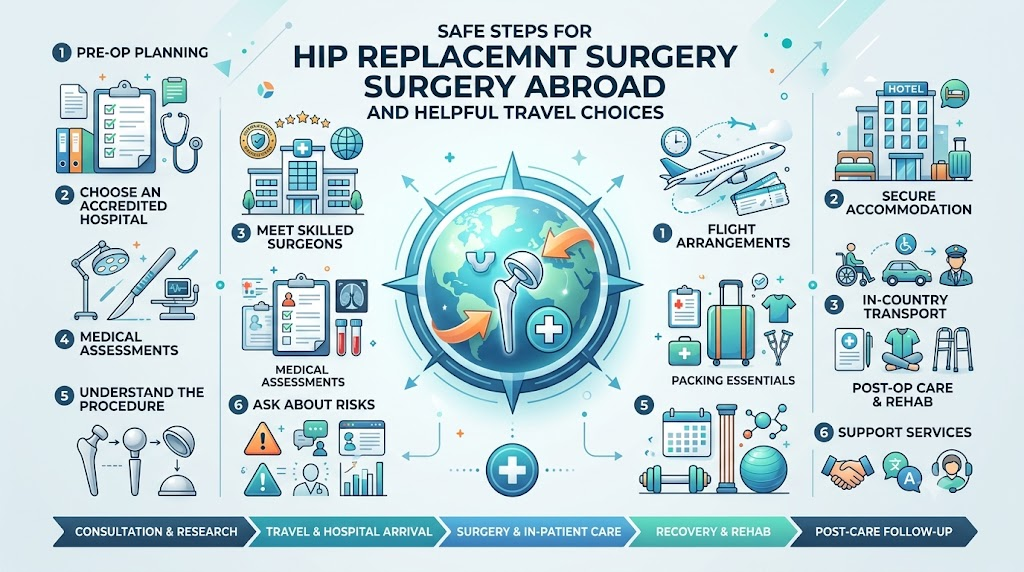
Medical travel follows a clear path. First, you gather your home health records. A doctor reviews your scans next. Then the clinic gives you a treatment plan. You also receive an estimated price sheet. Next, you pick your hospital and surgeon. You book your travel and fly out. The surgeon does the hip operation. You rest in the hospital bed. You start gentle walking with a helper. Finally, the doctor checks your hip before you fly home. A global medical tourism company like HipHospitals.com can help you compare these options.
A Simple Medical Travel Plan
Good planning keeps you safe during medical travel. The table below shows the key steps to take.
| Step Number | Action Step | Important Detail |
| Step 1 | Talk to your home doctor | Confirm that surgery abroad is safe |
| Step 2 | Collect health files | Gather X-rays and recent test results |
| Step 3 | Compare clinics | Review doctor skills and safety badges |
| Step 4 | Request price quotes | Ask for all hidden fees in writing |
| Step 5 | Book recovery stays | Choose a calm hotel near the clinic |
Real-Life Travel Scenarios
- A retired teacher needed care without long delays. She compared three clinics abroad. She picked a nearby hospital with clear prices. Her family traveled with her to help.
- A self-employed builder had no joint surgery insurance. He looked at hip replacement cost by country. He picked a hospital in India. He saved money and planned four weeks of rest.
- An active runner wanted a special joint implant. She searched for the best country for hip replacement surgery. She picked an expert surgeon in Thailand. She stayed extra days to finish physical therapy.
Common Mistakes to Avoid When Planning Care Abroad
- Picking a hospital based only on the lowest price.
- Forgetting to check surgeon licenses and credentials.
- Skipping a talk with your regular home doctor.
- Booking flights without extra legroom for recovery.
- Forgetting to ask about hidden hospital fees.
- Planning a flight home too soon after surgery.
- Forgetting to translate medical files into English.
- Leaving home without a clear physical therapy plan.
What Recovery Can Look Like
Recovery begins right after you wake up. Nurses help you sit up in bed. Soon, you take small steps with a walker. Movement stops blood clots and builds strength. Physical therapy teaches you how to bend safely. Pain medicine keeps you comfortable. You visit the clinic for wound checks. Most people need weeks of steady rest. Do not rush to travel right away. Always follow your own surgeon’s exact advice.
Safe Medical Travel Practices
Put your personal safety first at all times. Talk with your home doctor before you leave. Check all hospital licenses carefully. Ask the surgeon about infection risks. Make sure you understand the whole surgery plan. Plan your ride from the airport in advance. Keep copies of your health records in your bag.
1. What is the average recovery time after hip replacement surgery abroad?
Most patients stay in the hospital for two to four days. You then rest at a local hotel for one to two weeks. Full healing takes two to three months. Your surgeon must clear you before you fly home. Light walking starts right away, but bones take time to heal fully.
2. Can I fly home right after total hip replacement surgery?
No, you should never fly right after hip surgery. Flying too soon increases your risk of blood clots. Most orthopedic doctors advise waiting at least ten to fourteen days. Long flights require extra leg space. You must stand and walk during the flight to keep blood moving.
3. Why does hip replacement surgery cost less in other countries?
Labor costs and hospital running costs are lower in many foreign countries. Government rules also keep medicine prices lower. This allows clinics to offer lower rates. A lower price does not mean the care is bad. However, you must still check the hospital’s quality standards.
4. How do I know if an overseas hip surgeon is qualified?
You should ask for their active medical license number. Check how many years they have replaced hips. Ask if they trained with global orthopedic groups. Good surgeons share their background openly. You can also ask how many total hip replacement procedures they perform each year.
5. What happens if I have medical problems after returning home?
You must plan for this risk before you leave home. Share your surgery details with your local family doctor. Keep all hospital discharge papers and surgical notes. If pain or fever starts, visit an emergency clinic immediately. Never ignore sudden swelling or redness in your leg.
6. Does insurance pay for hip replacement surgery abroad?
Most standard insurance plans do not cover surgery in other countries. Some global health plans may pay for part of it. Always call your insurance provider first. Ask if they cover foreign hospital bills or travel costs. You usually need to pay the hospital directly.
7. What documents should I pack for medical travel?
Pack your passport and medical visa. Bring your original X-rays, MRI scans, and blood reports. Take a written list of all your daily medications. Carry emergency contact numbers for your family and doctors. Keep physical copies and digital copies on your phone for safety.
8. What is the difference between partial and total hip replacement surgery?
A partial hip replacement only replaces the ball part of the joint. Doctors often use it for hip fractures. A total hip replacement replaces both the ball and the socket. Total replacement is common for severe arthritis. Your surgeon picks the method based on your joint damage.
9. Can family members travel with me for surgery support?
Yes, having a family member with you is very helpful. They can help you move around the hotel room. They also help carry bags and track medicine times. Many hospitals provide extra beds for family in patient rooms. Check hotel access for walkers and wheelchairs too.
10. How do I choose between different countries for hip surgery?
Look at flight distance, visa rules, and total package costs. Consider language comfort and hospital standards. Some people pick nearby countries to shorten travel time. Others look for specialized hip replacement surgeons in specific hospital networks. Balance the costs against your personal comfort and safety.
11. What questions should I ask during an online doctor consultation?
Ask what brand of hip implant the surgeon will use. Ask about their personal infection rates and complications. Inquire about the length of your required hospital stay. Confirm what physical therapy you will receive. Finally, ask what emergency care the hospital provides if problems arise.
12. How does HipHospitals.com help patients plan treatment?
HipHospitals.com helps patients research trusted hospitals and specialist hip doctors. It allows you to compare costs across different destinations. The platform can help arrange hospital price quotes. It also provides helpful guidance on airport pickups and local hotels. It makes comparing medical travel options simpler for families.
Conclusion
Hip replacement surgery abroad requires careful thought and clear planning. Affordable hip replacement surgery helps many people, but cost should never be your only guide. Always verify the credentials of your hospital and hip replacement surgeons first. Plan your flight, hotel stay, and physical therapy with care. Give your body plenty of time to rest before you travel back home. Most importantly, discuss all your surgical options with your regular doctor. HipHospitals.com is a helpful platform to begin your research on international hospitals.
Leave a Reply