Understanding Complex Lab Procedures and Modern Care Options in Assisted Reproductive Medicine
Introduction
Many people hope to grow a loving family. But some people face hard challenges along the way. So they start to research modern fertility care. This helpful guide explains the complete fertility care path in plain words. You will learn about basic body steps and doctor visits. Next, we look closely at real clinic fees. We also explore overall clinic results and treatment options. You will read about travel care, egg freezing, and special laboratory steps. In addition, you will see how to compare clinics with calm care. An independent research platform like IVFHospitalsNow can help you discover verified clinic profiles. Good facts give you peace of mind. Then you can prepare clear questions for your fertility doctor.
What Is IVF Treatment?
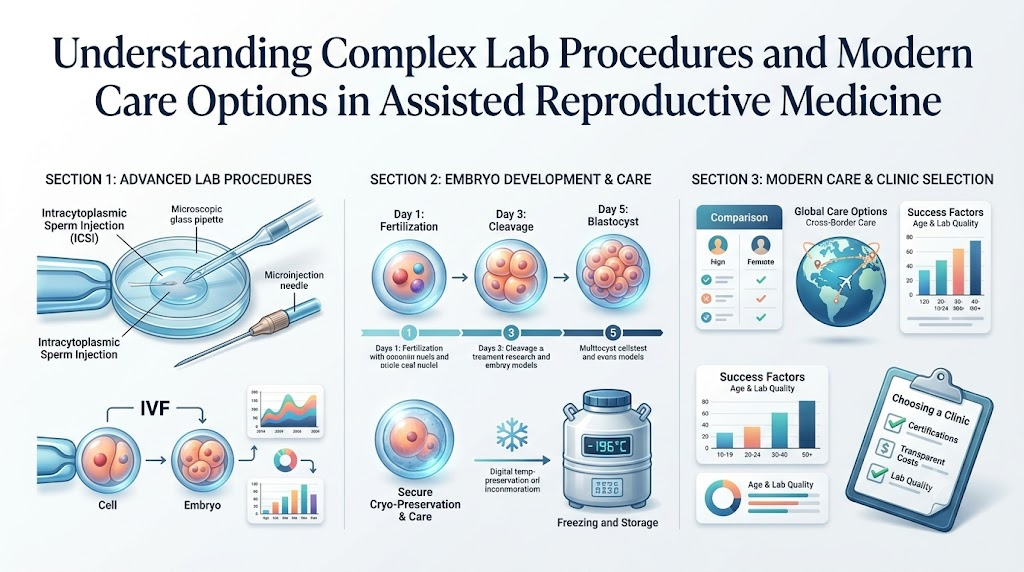
IVF stands for in vitro fertilization. In simple words, doctors help an egg and a sperm join outside the body. First, the woman takes daily medicines to grow several healthy eggs. Next, the doctor collects these eggs with a tiny needle. The laboratory team places the eggs and sperm together in a safe dish. The joined cells quickly grow into tiny balls of cells called embryos. Then the doctor moves a healthy embryo into the woman’s womb. This important final step is called embryo transfer. But IVF treatment is not a magic fix for every person. Success depends on your unique body. Therefore, you should always consult a licensed fertility doctor about your personal health needs.
Understanding IVF Treatment Cost
The total IVF treatment cost changes from clinic to clinic. First, basic doctor visits and blood tests require separate payments. Next, daily fertility medicines often cost extra money. The clinic also charges for egg collection, laboratory work, and embryo transfer. Then, freezing extra embryos adds yearly storage fees. Some patients also choose special genetic tests. These extra tools quickly increase your final bill. So you must always ask for a complete list of fees upfront. The table below shows major expense areas to help you plan your family budget.
Common IVF Care Expenses
| Cost Category | What This Fee Covers | Important Detail to Check |
| Initial Medical Tests | Blood tests, scans, and doctor consults | Check if tests expire quickly |
| Daily Medicines | Injections to help eggs grow | Ask if drugs are included in quotes |
| Laboratory Procedures | Joining eggs and sperm in the lab | Ask about extra charges for special tools |
| Embryo Storage | Freezing extra healthy embryos | Confirm the exact yearly storage price |
Why IVF Success Rates Need Care
Many people look at clinic numbers first. But one single number never tells your whole personal story. IVF success rates depend on many clear facts. A woman’s age plays a very big role. Egg quality and sperm quality also matter greatly. In addition, personal health history and medical reasons change the outcome. Some clinics only treat simple cases to show higher numbers. Other clinics proudly help patients with very tough health challenges. Therefore, high clinic numbers do not guarantee a baby for you. You must always ask specific questions to understand true clinic data.
Questions to Ask About Clinic Data
| Important Question | Why You Must Ask | What the Answer Shows |
| What are the rates for my age? | Age changes egg health | Shows your realistic personal odds |
| Does the rate mean live births? | Some clinics count positive tests only | Confirms healthy babies taken home |
| How many embryos do you transfer? | Multiple transfers carry higher risks | Shows clinic safety standards |
| What is your lab cancel rate? | Cycles stop if eggs do not grow | Reveals overall laboratory strength |
How to Compare Fertility Clinics
You need clear facts when you compare fertility clinics. First, check the qualifications of the medical doctors. Make sure the clinic uses an advanced, clean laboratory. Next, study the exact fertility treatment options they offer. Ask about emergency help and daily follow-up care. You should also demand clear cost sheets with zero hidden fees. In addition, review transparent success records for people with your exact health background. Independent research tools like IVFHospitalsNow help you study verified clinic details without pushy sales talk. Finding trusted information helps you make safe, smart choices.
IVF Abroad and IVF Cost by Country
Many people travel to other countries for care. This choice is called IVF abroad. People often seek lower treatment prices or shorter waiting lists. However, you must carefully study the full IVF cost by country. Travel tickets, hotels, and local food add new expenses. Language differences can also cause stressful mix-ups. Furthermore, foreign health laws and clinic rules differ across borders. You might also need unexpected extra trips if your body needs more time. Therefore, low prices alone should never guide your final decision. Always balance savings with safety and post-treatment care at home.
Egg Freezing and Future Family Plans
Egg freezing helps women save healthy eggs for the future. First, the patient takes daily hormone medicines for two weeks. These medicines help multiple eggs mature inside the ovaries. Next, the doctor gently collects the eggs during a short procedure. The laboratory team freezes these eggs right away at very cold temperatures. The frozen eggs stay safe in liquid tanks for many years. Later, doctors can thaw the eggs and add sperm. However, freezing eggs never guarantees a future pregnancy. It only preserves your eggs at their current age. Talk with your doctor to see if this option fits your life.
What Is ICSI Treatment?
Some families need extra laboratory help to join cells. Doctors often suggest ICSI treatment for these cases. ICSI means intracytoplasmic sperm injection. In this special process, an expert scientist selects one single healthy sperm. Next, the scientist injects that single sperm straight into the center of an egg. Doctors often suggest this tool when sperm count is low or weak. It also helps when past attempts failed to fertilize eggs. But ICSI still does not guarantee a healthy pregnancy. It simply helps the sperm enter the egg safely. Your doctor will tell you if your family needs this focused method.
Real-Life Scenarios and Experiences
- Scenario 1: Comparing Full ExpensesMark and Lisa visited two local clinics. Clinic A gave them a very cheap base quote. But it left out medicines and yearly embryo storage fees. Clinic B gave a higher total price that covered everything. Mark and Lisa chose Clinic B because the final cost was completely honest.
- Scenario 2: Reviewing Age-Based ResultsElena was thirty-nine years old. She saw an online advertisement boasting an eighty percent success rate. But she asked the doctor for data matching her exact age group. The real rate for her age was twenty-five percent. This honest talk helped Elena set realistic expectations.
- Scenario 3: Choosing Travel Care CarefullyDavid and Priya thought about traveling overseas for cheaper care. Then they calculated plane tickets, hotels, and missed work days. The total cost was almost the same as their local clinic. So they stayed home to enjoy family comfort and easy doctor access.
Common Mistakes to Avoid When Choosing Care
- Believing Low Base QuotesMany clinics advertise cheap base fees to attract new visitors. But these quotes often hide medicines, blood tests, and lab scans. Always ask for an itemized price sheet before signing any clinic papers.
- Trusting Overall Clinic PercentagesA single high percentage does not apply to every single patient. Age and health history change results dramatically. Always request specific data for your exact age group and medical background.
- Ignoring Daily Travel StressFertility care requires frequent clinic visits for blood checks and scans. Picking a distant clinic causes high travel stress and missed work. Choose a reliable clinic with an easy daily commute.
- Overlooking Laboratory QualityModern embryos need stable air, clean rooms, and skilled lab scientists. A clinic with poor lab tools will lower your overall chances. Always ask about laboratory equipment and staff certifications.
- Skipping Emotional Support ServicesFertility care can bring heavy emotional stress and worry. Some clinics offer zero counseling or mental wellness support. Look for care teams that provide dedicated counseling options.
- Forgetting Future Embryo Storage FeesExtra embryos need safe freezing and cold tank storage. Many patients forget that clinics charge recurring yearly fees for storage. Clarify freezing and storage costs before you begin treatment.
- Rushing Past Legal Rules AbroadDifferent countries follow very different laws for fertility care and parental rights. Breaking rules or missing legal steps causes heartbreaking delays. Always read local fertility laws carefully before booking overseas treatment.
- Failing to Ask About Doctor AccessSome large clinics pass patients to different nurses at every single visit. This lack of personal attention leads to confusing advice. Choose a clinic where you can speak directly with your primary doctor.
How IVFHospitalsNow.com Can Help With Research
Researching fertility care can feel confusing and heavy. IVFHospitalsNow works as an independent fertility education, research, and provider-discovery website. It helps families learn about medical terms without stressful sales pitches. You can freely research basic fertility conditions, diagnostic tests, and daily medicines. The platform also outlines real costs, doctor backgrounds, and clinic locations clearly. In addition, you can read comprehensive country guides to understand international rules. The website does not provide direct medical treatment or personal diagnosis. Instead, it offers verified clinic data so you can compare fertility clinics with confidence.
A Simple Way to Plan Your Research
- Step 1: Write down your complete medical history and past test results.
- Step 2: Make a list of local IVF clinics and check doctor backgrounds.
- Step 3: Request itemized cost sheets that include medicines and storage fees.
- Step 4: Ask each clinic for age-specific live birth rates.
- Step 5: Ask about specialized laboratory tools like ICSI treatment.
- Step 6: Review egg freezing options and yearly storage pricing.
- Step 7: Calculate total travel costs if you consider treatment abroad.
- Step 8: Confirm how the clinic handles emergency questions after hours.
- Step 9: Use independent discovery sites to check clinic verification details.
- Step 10: Schedule a full consult with a licensed fertility doctor to choose your path.
Frequently Asked Questions
1. What is the basic definition of IVF care?
IVF is a medical method where doctors help eggs and sperm meet outside the body. Doctors collect eggs from the ovaries and join them with sperm in a special laboratory. Next, the joined cells grow into embryos over several days. Finally, a doctor transfers a healthy embryo into the womb. This gentle care helps individuals and couples build families when natural conception faces roadblocks.
2. How much does a standard cycle cost on average?
A single cycle often costs several thousand dollars. The base price usually covers egg collection and basic laboratory work. But medicine costs, diagnostic scans, and blood tests add extra expenses. Freezing extra embryos also brings annual storage charges. Because prices vary between clinics and countries, you must always ask your clinic for an itemized fee sheet before you begin.
3. What personal health factors affect clinic results?
Personal results depend heavily on the woman’s age and overall health. Younger women usually produce healthier eggs, which improves outcomes. In addition, sperm health, uterine lining quality, and genetic factors play important roles. Lifestyle habits and underlying medical issues also matter. Because each body is unique, general clinic numbers cannot predict your exact chance of taking home a baby.
4. What is the difference between IVF and ICSI?
Standard IVF places many sperm near an egg in a dish so fertilization happens naturally. In contrast, ICSI involves an expert scientist who injects one single sperm directly into an egg. Doctors often suggest ICSI when sperm counts are low or past attempts struggled. Both methods create embryos, but ICSI gives extra laboratory help during the initial fertilization step.
5. Does egg freezing guarantee a baby in the future?
Egg freezing preserves healthy eggs at your current age, but it never guarantees a future pregnancy. Some eggs may not survive the warming process years later. Other eggs might fail to fertilize or stop growing after fertilization. However, freezing eggs keeps your family options open. It acts as an important backup plan rather than an absolute promise of future motherhood.
6. Why do some families choose to travel overseas for care?
Patients often look abroad to find lower treatment fees or shorter clinic wait times. Some people also seek specific donor programs that their home country does not allow. However, traveling adds hotel costs, flight tickets, and extra time away from work. You must also study foreign laws carefully. Always balance financial savings against safety, language barriers, and follow-up medical support.
7. How long does one full treatment cycle take?
One complete treatment cycle usually takes around four to six weeks. First, the patient takes daily hormone medicines for two weeks to mature eggs. Next, the doctor retrieves the eggs and the lab fertilizes them over five days. Finally, the doctor performs the embryo transfer. Some patients wait a month before transfer to allow their body to rest fully.
8. Are fertility hormone injections painful for patients?
Most patients feel nervous about daily hormone injections at first. However, the needles are very thin and enter just beneath the skin. Many people feel a tiny pinch or slight burning sensation. Using ice packs or changing injection spots helps ease mild discomfort. Over time, giving the daily shots becomes a normal and manageable part of the daily routine.
9. What happens to healthy extra embryos after a cycle?
Couples often create more healthy embryos than they need for one single transfer. The laboratory freezes these extra embryos in safe liquid tanks. You can use these frozen embryos for future family planning without repeating the egg retrieval surgery. You must pay an ongoing storage fee to keep them frozen, or you can choose to donate them.
10. How should a patient begin comparing local clinics?
Start by researching doctor certifications, clinic years in service, and laboratory technology. Request a complete pricing sheet that explains all medicine and storage costs upfront. Next, ask for specific live-birth success rates for your exact age group. Independent research platforms can also help you find verified clinics. Finally, book an initial consult to see if the staff communicates kindly.
11. Can lifestyle choices improve treatment results?
Healthy lifestyle choices support overall reproductive health and general well-being. Eating balanced foods, drinking plenty of water, and getting steady sleep help your body stay strong. In addition, avoiding smoking, heavy alcohol, and high stress levels protects egg and sperm quality. While healthy habits improve your wellness, they work alongside medical care rather than replacing expert doctor guidance.
12. Why should patients use independent research websites?
Independent research sites provide clear educational facts without biased promotional sales pitches. They help patients learn complex medical words and compare clinic services safely. You can review transparent cost guides, doctor profiles, and country rules in one organized spot. Using an independent research tool empowers you to ask smart questions when you sit down with your fertility specialist.
Conclusion
Fertility care offers wonderful possibilities for hopeful parents. But you must research clinics with patience and clear eyes. Never look at just one low price quote or one flashy percentage. Compare complete costs, doctor experience, laboratory quality, and compassionate follow-up care. Educational platforms like IVFHospitalsNow help you explore treatment paths and verified clinic details calmly. Take your time to gather honest facts. Then sit down with a qualified fertility specialist to choose the best treatment path for your unique family dreams.
Leave a Reply